
Fire safety is paramount to all property buildings including home, office, or an industrial site. Appropriate equipment does not only save lives, but also does not damage property. Since automatic systems and portable firefighting equipment can be used, it is important to understand the purpose of each fire safety equipment in order to protect the hundreds of people properly. The following is a detailed description of the most significant fire safety equipment on the market.
Fire Sprinkler System
A fire sprinkler system is developed to sense heat or smoke and automatically spray water to manage or put off fires. It has been among the best way of suppressing fire at the early stages. The sprinkler systems may be tailored to include coverage of a whole building or high-risk location. It is important to regularly check and maintain the system in order that it will act in case of any emergency. Fire sprinklers are used to reduce harm, guard property as well as enhance the safety of occupants.
Pendent Sprinkler
Pendent sprinklers are attached to the ceilings that affect the water straight down upon the fire when the alarm is raised. They are found in offices, residential buildings and industrial ceilings. The construction is such that it covers as much area as possible in open areas and snopts out flames at the earliest stage. Pendent sprinkers are attached to the main fire sprinkler system just in case of automatic operation. Height and spacing of installation should be proper to be effective.
Upright Sprinkler
Upright sprinklers are fitted to the pipes and spout water vertically and this flows down so that it forms a wide area. They fit perfectly in warehouses, manufacturing facilities and industrial storage areas. This kind of sprinkler assists in covering structures such as beam or racks so that the water will be exposed to concealed fire locations. Upright sprinklers are very tough and commonly applied in areas where the pendent sprinklers have no application. Regular maintenance is taken to make sure that the performance is at its best in case of an emergency.
Conventional Sprinkler Head
A traditional sprinkler head is a typical fire suppressing mechanism that will trigger when a fusible link or a glass bulb melts. It finds application in homes, commercial and industrial buildings. Such sprinklers are useful in controlling fires at their initial levels. The location and distance should be as per the fire safety requirements in order to achieve maximum coverage. They can be used with most fire sprinkler systems and are expected to be tested frequently in order to be reliable.
Deluge Valve Sprinkler
Sprinklers of this type are deluge valve sprinklers applied in high risk industrial locations where there is the possibility of fire spreading rapidly. Contrary to conventional sprinklers, deluge systems discharge huge amounts of water simultaneously across all open sprinklers. They are linked to fire detectors to activate at the moment. These come in handy in chemical plants, oil refineries and storage facilities having flammable materials. System readiness is important by way of regular inspection and flow testing.
Vertical Sidewall Sprinkler
Vertical sidewall sprinklers are mounted on walls and they are supposed to cover corridors or passages. They also spray out water in a fan shape to ensure that fires do not spread to other rooms and corridors. Good in offices, hotels, and warehouses that have particular zoning needs. These sprinklers are incorporated in fire suppression systems to run automatically. Maintenance also makes them clear and operational in times of emergencies.
Alarm Valve Sprinkler & Butterfly Valve Wafer Type
Sprinkler systems have alarm valves and butterfly valve wafer types that manage water flow when they are triggered by alarm. They also play an important role of maintaining and controlling water distribution. Alarm valves will provide instant attention to residents in case of a fire. Large piping systems have Butterfly valves which achieve dependable control over water flow. The two components must be tested on a regular basis to ensure functionality.
Fire Alarm System
An early fire detection and occupant warning system is necessary to notify the occupants about fire. It employs manual call points, smoke detectors and heat sensors to identify fires. It is able to automatically activate sprinkler systems or suppression systems. The fire alarms play an important role in the residential and commercial area to reduce the number of casualties. Alarms are sensitive to the needs of the user because of regular maintenance and testing.
Fire Hydrant System
Fire hydrants are systems that provide pressurized water to put out fire either using the hose or manually. They are very popular in industrial, commercial as well as big residential installations. The hydrants should be well located so that they can be easily accessed in case of an emergency. They are usually attached to high pressure/high coverage water pumps. Periodic testing is also on the hydrants to make sure they are in operation and water does not stop flowing.
CO2 Flooding System
CO2 flooding system is used to extinguish fire in those locations where water can cause destruction such as server rooms or electrical panels. It replaces oxygen to put off the fire without a trace. The CO2 systems suit sensitive industrial and commercial areas. The protocols should be followed strictly to avoid injuries to personnel. It is inspected and replenished regularly to make the system stand on alert.
Automatic Fire Extinguisher
Fire or overheating is detected by automatic fire extinguishers which discharge extinguishing agents automatically. They can be used in high risk places such as kitchen, server rooms and industrial zones. Automatic systems minimize the response time and also it can avert the growth of fire. To be as effective as possible, they should be properly installed and calibrated. Frequent checkups make it reliable and refill ready.
Dry Chemical Fire Extinguisher
Dry chemical fire extinguishers can deal with flammable liquids, electrical fires and general combustibles. They act by preventing the chemical combustion of a fire. They are small extinguishers that can be taken anywhere and are necessary in homes, offices and industrial installations. They should be trained to the staff to operate them properly. They should be checked regularly to make sure they are well charged and working.
Fire Extinguisher with Water
The fire extinguishers that are based on water can be used on normal combustible substances such as paper, wood, and cloth. They are mostly deployed in homes, offices and low risk industrial places. These extinguishers are user friendly and eco-friendly. One should take caution when using water-based agents in electrical fires. Regular refill and pressure checks are also considered as part of the maintenance.
Mechanical Foam Fire Extinguisher
Mechanical foam extinguishers are fitted to flammable liquid fire such as oil or gasoline. Foam covers the fuel in a blanket making oxygen unable to support the fire. Usually in industrial kitchens, workshops and chemical storage locations. They are very efficient and deter re-ignition of fire. The safety compliance requires regular inspection and refills.
Fire CO2 Extinguisher
CO2 fire extinguishers are created to deal with electrical and flammable liquid fire. Oxygen is replaced by CO2 to put out the fire without a residual. Good in server rooms, electrical panels and labs. These extinguishers are portable and easily usable and thus are a vital component of the contemporary fire safety measures. Frequent inspections will be made to make sure that the cylinders are filled and ready to use.
Stainless Steel Fire Extinguisher
Stainless steel fire extinguishers are both resistant to corrosion and durable as well, hence suitable in an industrial and outdoor environment. They are durable, strong and can deal with a variety of fire types. Ideal in factories and warehouses, as well as in the coastal setups. They need to be labeled properly and inspected periodically to make sure that they work.
Fire Fighting Pumps
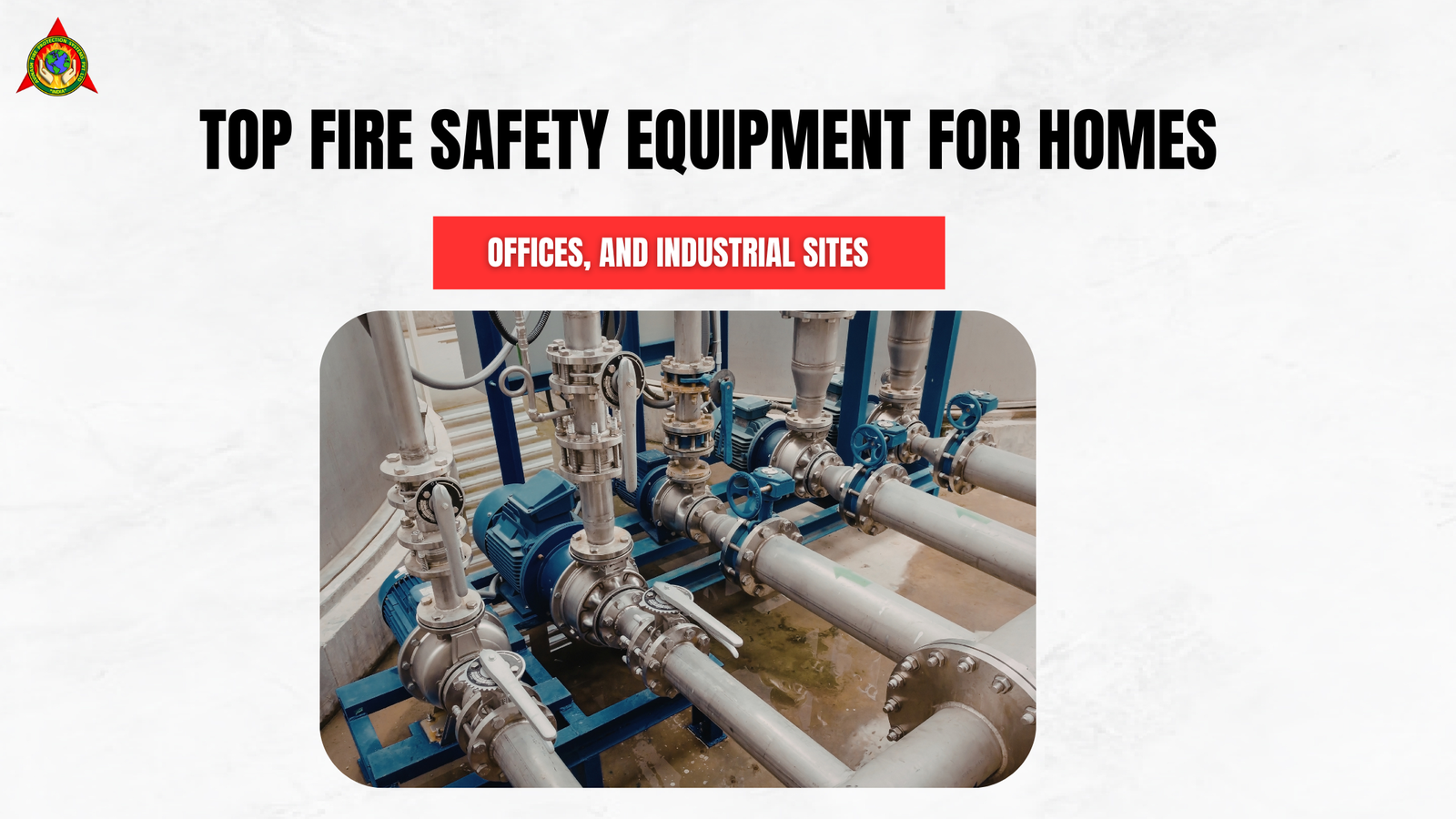
Firefighting pumps supply water at high pressure to hydrants and sprinkler systems. Types include:
- Diesel Fire Pump: It is a consistent one to be used in industrial situations that do not need power interruptions.
- Fire Fighting Pumps: Pumps used as standard in office, industrial complexes and large buildings.
- Jockey Pump: Keeps the pressure in the system to make it ready when required.
- Portable Pump Fire & Fire Trailer Pump: Mobile pumps that are used when setting up a temporary or in remote locations.
- Pump for Fire Tender: This is used in order to supply sufficient water to fire fighting vehicles.
Periodic service is necessary to maximum performance in case of an emergency.
Non-Return Valve
Non-return valves are used to ensure that water flows in the right direction, and it does not go back in the fire systems. They are essential to sprinkler and hydrants systems. These valves ensure that the pumps and other equipment are not damaged by the reverse flow. It should be inspected regularly to make sure it is functioning.
Water Curtain Nozzle
A water curtain nozzle establishes a wall of water to ensure there is no spread of fire in the industrial places. They are perfectly suitable in high-risk areas such as chemical plants. These nozzles safeguard property and man since they contain the fire. Fitted into fire pumps so as to guarantee proper water pressure. Periodic testing ensures that things are operational.
Sluice Valve
Hydrant and sprinkler systems have sluice valves that regulate the flow of water. These are essential in the maintenance section isolation or emergency isolation. With proper functioning, water flows into the right direction. These valves should be periodically checked so as to avoid leakage or faulty functioning.
Call to Action
Make sure that your property is well safeguarded using professional fire safety systems. Avinash Fire Protection Systems can also be contacted today to provide professional consultation, fire sprinkler system installation, and maintenance of fire alarms, hydrants, extinguishers, and other entire fire safety equipment. Keep lives, property and assets safe with the appropriate fire safety measures.