
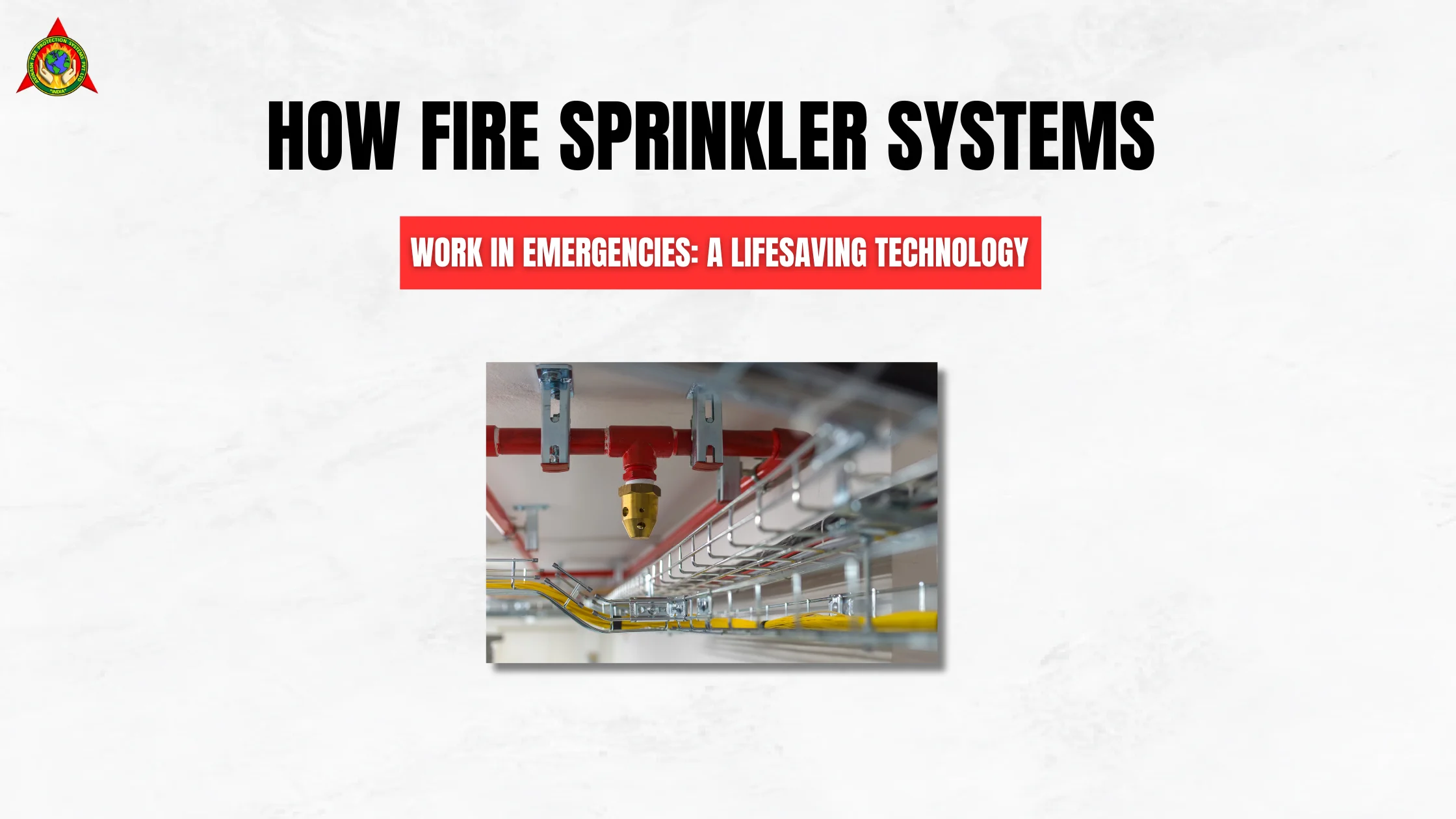
Time is extremely imperative in an instance of a fire. The quicker reaction, the greater the likelihood of a decrease of the damage and loss of the life would be. One of the most effective tools in combating fires, especially in large buildings, is a fire sprinkler system. But how fire sprinkler systems work in emergencies is often a mystery to many people. In this article, we’ll explain exactly what happens when a fire sprinkler system is activated and why it is a critical piece of fire safety.
How Does a Fire Sprinkler System Work in Emergencies?
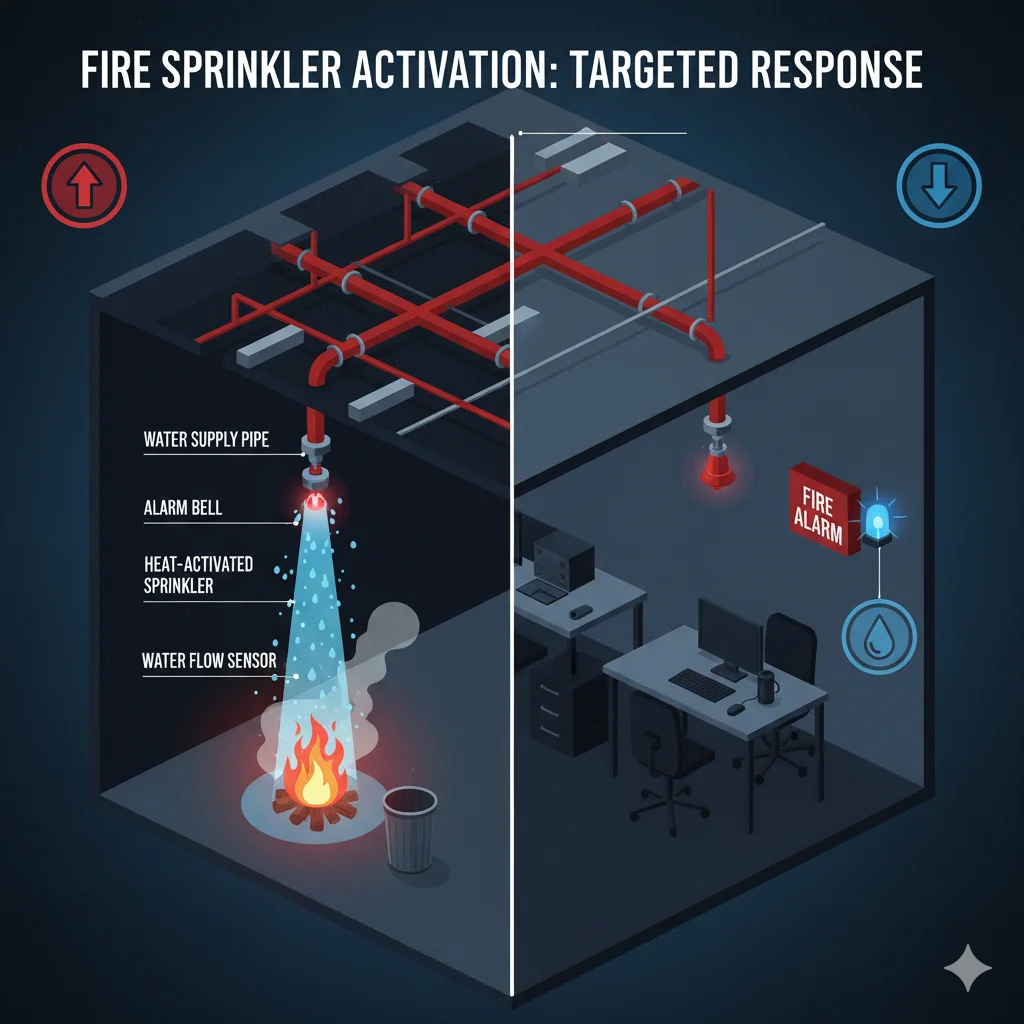
In an emergency situation, the key to understanding how fire sprinkler systems work lies in how quickly they can respond to a fire’s presence. The design of a fire sprinkler system ensures that only the affected areas are targeted, saving water and minimizing damage in unaffected parts of a building.
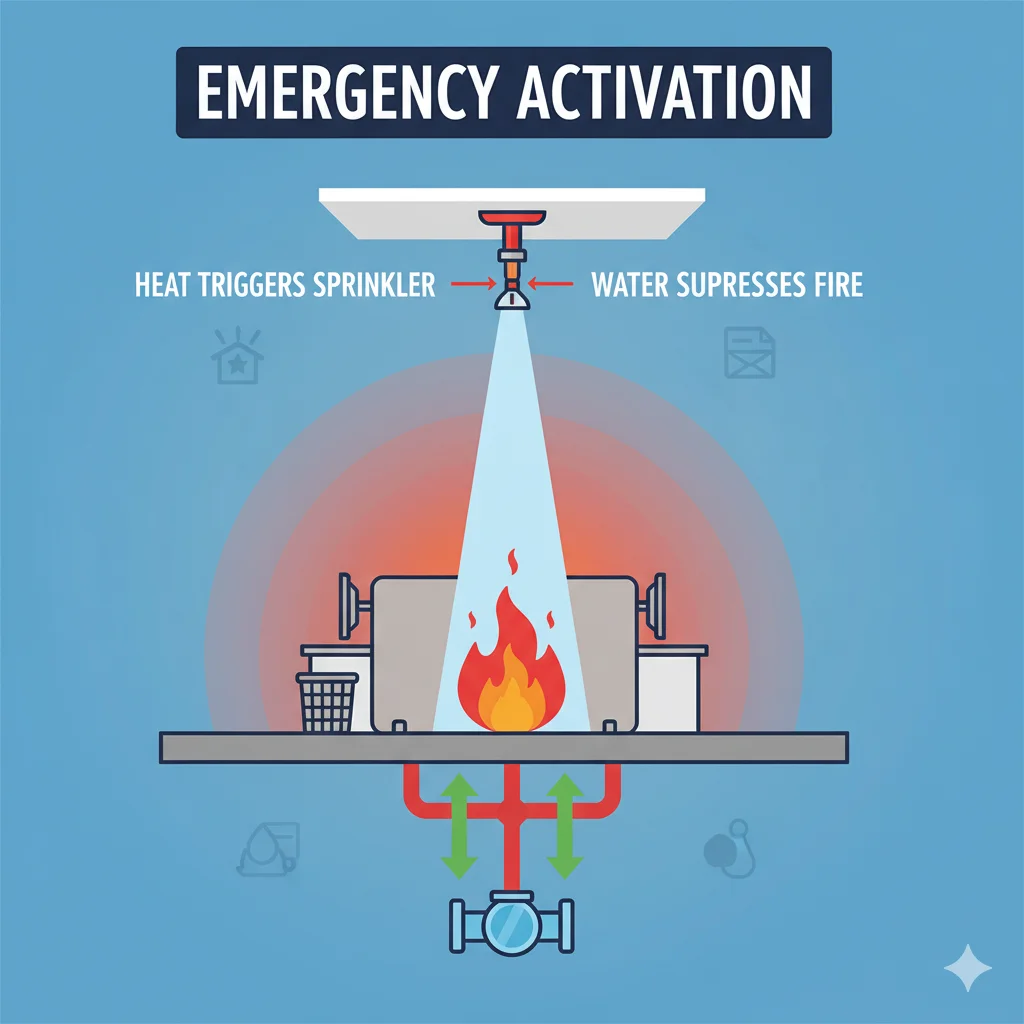
A typical fire sprinkler system is made up of several essential components, including pipes, valves, sprinkler heads, and a water source. The heads of the sprinklers are typically mounted to the ceiling and are fitted with a heat sensitive element (typically a metal connector or a glass bulb), which becomes operational at elevated temperatures. This component is activated by the increase of temperature due to heat caused by a fire and water is discharged in order to extinguish or sustain the fire. Importantly, how fire sprinkler systems work in emergencies is based on this heat-detection technology, meaning only the sprinklers in the affected area will go off, unlike in movies where the entire building is drenched.
What Are the Ways and How Sprinklers are Activated in a Fire?
Whenever a fire escalates, it produces heat which the heat sensor, located in the sprinkler head, is able to identify. This system will activate when the temperature reaches a certain degree (usually 155 o F and more, as determined by the kind of sprinkler head and local regulations). Upon release through the melting of the heat sensitive element or breaking of the valve causes the release of the water.
Why doesn’t every sprinkler go off during a fire?
The answer lies in the design of modern fire sprinkler systems. The sprinklers are independent and will only be activated in an environment where the temperature surrounding the sprinkler is higher than the pre-defined temperature. This helps to avoid wastage of water to parts that have not been affected by the fire.
Can a Fire Sprinkler System Prevent Fire Spread?
Yes, the goal of a fire sprinkler system is to suppress or contain a fire long enough to control it and allow for safe evacuation. The use of best fire sprinkler system will ensure the fire is contained and will lower the severity of the flames and will buy time to allow the arrival of fire services. This system has been found to be efficient in holding down fires in their initial stages where small fires can be put under control before they develop into raging fires.
What Types of Fire Sprinkler Systems Are Available?
There are several types of fire sprinkler systems designed to meet the unique needs of different buildings and it necessary every building should have fire sprinkler. Both systems have the same principle of operation, namely heat detection and water discharge, but the means of installation and operation are different. We would like to have a closer look at the most common types of fire sprinklers:
1. Pendent Type Sprinkler
What is the Pendent Type Sprinkler?
One of the most popular types of sprinklers currently used in the fire suppression systems is a pendent type. It is planned to be suspended on the ceiling, and the sprinkler head sprays the water downwards. These sprinklers are suitable in securing places such as offices, corridors, and houses..
How Does It Work?
The sprinkler head becomes on at the predetermined temperature level. The water is spurred out and drops to the fire beneath extinguishing it. Most of the commercial and residential areas can be served with this system.
2. Upright Sprinkler
Why Choose an Upright Sprinkler?
Unlike the pendent type, the upright sprinkler is installed on the top of pipes whereby it pushes water upwards and expands it over a larger area. This category is normally applicable in locations where ceilings are high or a location where the sprinkler heads must be raised due to aesthetic interest or security.
How Does It Work?
The upright sprinkler similar to the pendent sprinkler will be activated in case of the surroundings becoming hot and the water will come out to contain the fire. It can be used in areas like warehouses or manufacturing premises.
3. Conventional Sprinkler
What is a Conventional Sprinkler System?
The simplest kind of system used to provide fire protection is the conventional sprinkler system. It is made of an easy installation of sprinklers that are attached to a central pipe network. These systems are mainly applicable to the small to medium sized buildings and provide good fire protection.
How Does It Work?
The sprinklers take the form of heat-sensitive sprinklers and when the sprinklers burst, water is sprayed into the fire using a nozzle. Water gets distributed all over the affected region to contain the blaze.
4. Vertical Sidewall Sprinkler
Why Use a Vertical Sidewall Sprinkler?
A vertical sidewall sprinkler is also an excellent choice when there is a limitation on the ceiling height of the space or the aesthetic appearance is important. These sprinklers are fixed on the walls instead of being placed at the ceilings, which enable them to be able to cover a larger area without reducing the ceilings.
How Does It Work?
Such sprinklers like other types are triggered by heat and spray water to contain fire. They are generally installed in smaller rooms, corridors or places where the conventional ceiling mounted sprinklers may not be viable.
5. Alarm Valve Sprinkler
What Is the Alarm Valve Sprinkler System?
A sprinkler fire system may be an alarm valve sprinkler system, which is usually part of a more complicated fire protection system. It comes fitted with an alarm system that triggers on the activation of the sprinklers and notifies the occupants and emergency officials in real time. This kind is normally implemented in bigger and more serious facilities.
How Does It Work?
The sprinkler heads do go off whenever there is heat and an alarm is set off to alert everybody about the emergency. It is a critical element in the high-stake locations such as hospitals or chemical facilities.
6. Deluge Valve Sprinkler
When to Use a Deluge Valve Sprinkler System?
The deluge valve sprinkler is that which is intended to work in such a high-risk industrial facility like chemical plants or refineries where the fast response of fire suppression is required. A deluge system differs with traditional system where sprinklers are triggered one by one unlike the deluge system where all sprinklers open at the same time.
How Does It Work?
When the system is turned on, the water will be discharged via all sprinkler heads simultaneously which will cover the entire area. This kind of a system best fits in a situation where a fire may spread very fast and needs to be suppressed immediately.
7. High Velocity Water Spray Nozzle & Medium Velocity Water Spray Nozzle (MV-E)
What Are High and Medium Velocity Water Spray Nozzles?
These nozzles are typically used in highly specialized fire sprinkler systems, such as those found in aircraft hangars, power plants, or other industrial settings. High and medium-velocity spray nozzles have higher pressure and velocity of water applied to control the fire at a faster rate..
How Does It Work?
These nozzles spray or spray water in a fine mist which is used to suppress the fire by cooling the surrounding environment within a short period. The nozzles with high velocity are specifically useful in combating the large fires or fires that do not pass slowly.
How to Install Commercial Fire Sprinkler Systems
How to install commercial fire sprinkler systems involves several important steps, from designing the system to ensuring it meets local safety regulations. The installation is also essential and effective in setting up the system under fire situations.
1. Site Assessment and Planning
It is necessary to evaluate the layout and fire risk of the building before the installation. Fire sprinkler system installation professionals will evaluate the building’s design, size, and function to determine the type of system needed.
What’s Involved in the Assessment?
Assessment involves the detection of fire hazards, the water supply assessment, as well as checking the infrastructure of the building to determine its capability of supporting the system.
2. Installation and Testing
When the system is developed, installation commences. Pipes, valves, and sprinklers will be installed by certified professionals depending on the specifications of the building. Once installed, the system is properly tested to see that it is functioning correctly.
How Does the Testing Work?
Testing includes the process of checking the leaks, checking of the sprinkler heads, and checking of the system being connected to a high-quality source of water.
How to Turn Off Fire Sprinkler Systems in an Emergency
If a sprinkler system is activated due to an accidental fire or malfunction, knowing how to turn off fire sprinkler system can prevent further issues.
1. Shut Off the Water Supply
Most fire sprinkler systems are connected to a main water valve. The sprinkler system may cause additional damage in the event of emergency, which can be prevented by turning off the water supply.
What Should You Do After Shutting Off the Water?
Contact a professional immediately for a thorough inspection and repair of the system.
2. Seek Professional Assistance
In case you are not sure of how to go about it, always seek advice of the fire protection experts so that nothing is left unattended and repaired.
Frequently Asked Questions (FAQs)
No, the sprinklers closest to the fire will be used only. This will guarantee there is minimum water loss in the un-infested places..
You should hire a licensed fire protection professional for proper fire sprinkler system installation. They will check the requirements of your building and install the right system.
Incidental activate is also not common because sprinklers are triggered by heat. But there are extreme sources of heat that may activate accidentally.
Fire sprinkler systems should be inspected and tested at least once a year. Maintenance is a necessity to ensure good performance.