Summary
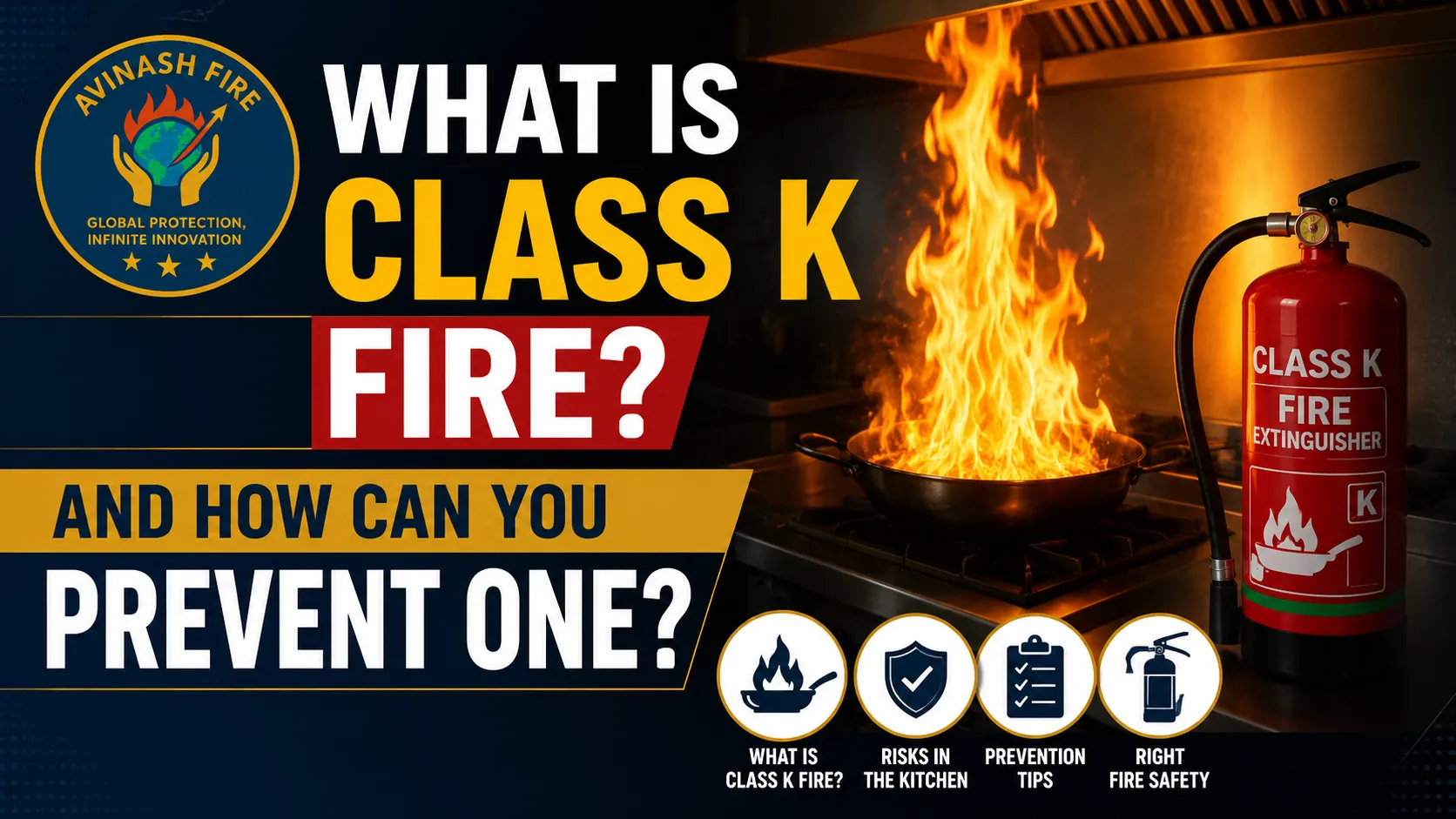
Class K fires are among the most hazardous in commercial kitchens and food preparation facilities. These fires occur when cooking oils, such as animal fat or vegetable oils, are ignited at very high temperatures. Due to the unique combustion characteristics of Class K grease fires, standard firefighting methods are ineffective and specific Class K suppressors are required. Knowing how Class K fires are ignited and how to prevent and extinguish them can greatly reduce property damage, injuries, and lost production.
Introduction
The safety of a workplace, house, or commercial outlet is incomplete unless there is an effective fire safety system. While this is an important aspect of setting up a fire, it is to be noted that fires are of different types. The classification of fires based on their fuel type is …
The type of fire is generally found in commercial kitchens, restaurants, cafeterias, hotels and at food processing facilities. Fats and oils used in cooking can reach high temperatures and consequently cause Class K fires to spread and become uncontrollable. If the incorrect extinguishing media is used, it can escalate the severity of the incident.
It is first necessary to examine how these fires occur, how they can be avoided and what equipment needs to be present in order to make the kitchen safe. By these simple methods of fire prevention and installed safety mechanisms, a company or home has less chance of experiencing a disastrous grease fire.
What constitutes a Class K fire?
A Class K fire is a fire involving some type of combustible cooking medium, like cooking oils, animal fats, and cooking grease. This kind of fire generally occurs in commercial-grade kitchens using large amounts of cooking oils, which are heated to very high temperatures. Deep fryers and grills produce high concentrations of heat that can start these fires if not carefully kept in check.
What sets a Class K apart from others is its characteristic of being the fuel type that is, even when the fires are put out, there is still residual heat on the fuel type present. This makes a Class K fire at risk of reignition if not suppressed correctly. Using water on a fires of this fuel type will not work and can make an already dangerous situation worse.
Common Sources of Class K Fires
There is several sources of ignition within a commercial kitchen. Deep fryers, stovetops, grills and the range are all common sources of grease-based fires. Overheating a frying oil above its flashpoint can cause an ignition quite rapidly.
Improper care of appliances also leads to higher fire hazards. Grease buildup in exhaust hoods, ducts, and filters can be another source of fuel that might ignite and then carry the fire through the ventilation system.
Why These Fires Are Dangerous
Category K fires burn extremely hot and can easily spread. Due to the nature of the oils involved in such fires, they tend to spat when disturbed, and can create several ignition points resulting in a faster spread.
Grease stays hot for a long time. You might put the visible flames out, but sometimes the fire can trigger again without a result suppression.
How Do Class K Fires Start?
Knowing how these fires start is the first step in being able to prevent them. The main reason for Class K fires is because of excessive heating of cooking oils or fats. When the oil gets to a certain temperature, the vapors it gives off can ignite when they come into contact with a spark or a source of heat.
Various operational & maintenance aspects are the reason behind the occurrence of fires. Few high accounts are employee errors, Equipment malfunctioning & poor cleaning practices.
Overheated Cooking Oils
Cooking oils have a defined smoke point & flash point. Leaving the oil unattended or heating it for too long can cause it to produce smoke and then flame.
Most concerned with the commercial fryer, which operates all day and can be more easily compromised through accidental or negligent temperature controls.
Equipment Malfunctions
Issues with thermostats not working properly, heating elements being broken or the burners being faulty can cause overheating. These conditions can lead to oil overheating.
Regular inspections and general maintenance may locate the potential dangers before they result in a fire emergency.
Why Is Prevention So Important?
Class K prevention is far more attainable than post-fire incident control. In any fire incident, injuries, operational downtime, revenue impact, and damage to homeowners’ or business premises are inevitable.
Regardless of the industry in which they operate, companies that focus on avoiding fire are able to foster safer workplaces and remain successful in the eyes of safety standards and their insurance provider.
Protecting Employees and Customers
Kitchen fires are difficult to contain, quickly spreading and endangering employees and customers. Injuries can include burns, smoke inhalation, and those sustained while evacuating.
Good preventative measures keep all persons in the facility safe.
Reducing Financial Losses
Fire damage can mean costly repairs, replacement of equipment and disruption to your business. Financial impact can also be caused by loss of revenue while the business is closed.
It is usually far cheaper to put measures in place to prevent the occurrence of a large fire incident than to have to recover from it.
What Safety Practices Can Reduce Fire Risks?
Ensuring the safety of the kitchen can help prevent grease fires. Workers should be trained on fire safety issues and receive training on the correct way to cook.
Having level-headed safety policies in place will result in standardised procedures across the daily operation and eliminate the risk of human error.
Monitor Cooking Activities
Unattended cooking is one of the main reasons of the fire to happen in the kitchen. Staff should be watching the cooker all the time.
Taking swift action has the benefit of preventing excess heating which can then be identified and most likely extinguished before ignition occurs.
Maintain Proper Housekeeping
Grease is a fire risk. Frequently clean cooking surfaces, hoods, filters and exhaust systems to remove accumulated combustible residues.
A tidy kitchen environment would have reduced the available fuel for potential fires to grow.
Contains what in the Class K extinguisher?
K Class: This fire has a special wet chemical formula that is used to quell cooking oil and grease fires. In these extinguishers, the solution usually has potassium compounds that interact with the burning oils, producing a foam-type layer over the top of the fuel.
The extinguishing prevents the oil from cooling and simultaneously insulating the fuel from oxygen. These factors combine to:
Minimize reignition; and control high-temperature grease fires.
Wet Chemical Suppression Process
The resultant effect when discharged from the tank is that the wet chemical agent has a cooling effect which cools the temperature of the burning oil.
The foam barrier formed by the released foam protects the surface and stops the burning process.
Advantages of Specialized Agents
They are intended exclusively for fires involving cooking and perform more effectively than a regular extinguisher.
They can also help to minimize the potential for reignition and so are valuable safety equipment in commercial kitchens.
What Is Class K Fire Extinguisher Used For?
This is a fire extinguisher for Class K fire, such as cooking oils, grease, and fats. They are typically used in restaurants, cafeterias, food trucks, hotels, and institutional kitchens.
Designed to tackle some of the problems unique to the high-temperature cooking media,60 even though it is not a standard extinguisher.
Commercial Kitchen Applications
Workplace restaurants and kitchens use these to save the employees and the workplace appliances from sudden marine fire.
Located conveniently close to cooking facilities so that they can be obtained in an emergency.
Emergency Response Benefits
When properly operated, the fire extinguisher allows for fast fire elimination and limit the propagation of the flames.
A knife protector in particular reduces damage and enhances safety when used in the kitchen.
What Is a Class K Fire Extinguisher and Why Is It Essential?
Class K-Cooking Fires: Class K (also written Class K) extinguisher is a special extinguisher designed for use on fires that involve cooking oils and fats. It is a modern addition to commercial kitchen systems.
The use of these in commercial kitchens during production hours is mandated by many fire regulations and safety standards.
Compliance With Fire Safety Regulations
Local regulations can require proper fire suppression equipment for food establishments.
Organizations are able to meet federal and insurance requirements by keeping compliant extinguishers.
Enhancing Overall Fire Preparedness
The proper extinguisher on hand enhances preparedness and the effectiveness of a response.
Together with the training of employees, it constitutes a significant element in an extensive fire safety strategy.
How Can Businesses Create a Fire Prevention Program?
A quality, extensive fire prevention program is a perfect balance of training, maintenance, periodic inspections and the development of emergency procedures. Businesses and facilities that make the effort to have a detailed, all-inclusive safety program drastically diminish the occurrence of fire.
Successful sustainability takes commitment from managers and employees.
Employee Training and Awareness
Employees need to be familiar with the type of danger they may encounter, the type of emergency the fire is associated with and the operation of the fire extinguisher.
Refresher courses should be scheduled on a regular basis so that safety procedures are continually reinforced.
Routine Safety Inspections
Regular maintenance allows for the detection of hazards early.
Recording of findings and corrective actions provides for continuous improvement of safety performance.
What Should You Do During a Class K Fire Emergency?
Proper reaction to a grease fire can prevent personal injury and reduce property damage. Appropriate reaction includes employees staying calm and following all fire procedures.
During fire emergencies, this will have to be quickly decided. The staffs must also know the correct equipment to use.
Activate Emergency Procedures
Activate impromptu displays while summoning other workers. Notify the fire brigade, if necessary.
One should evacuate most people to avoid the building while trying to secure everyone’s safety.
Use Appropriate Fire Suppression Equipment
Self-extinguishing devices and approved Class K suppression fluids must only be used by personnel trained in their operation.
If the fire gets out of control, move away from the fire and call the fire brigade.
The Role of Kitchen Fire Suppression Systems
Current commercial kitchens employ automated, cooking-specific fire suppression systems in addition to portable extinguishers.
Automatic suppression allows fires to be identified and suppressed in their early stages.
Automatic Detection Features
Sensors sense abnormal heat conditions and call the suppression agent as needed.
Firstly, from a safety perspective, early detection means shorter response times and less radiative preheating.
Integration With Ventilation Systems
Most systems override the operation of cooking equipment and the ventilation components on activation.
This triad of response shows that the ductwork and exhaust are prevented from being fed by the spread of fire.
Conclusion
Fires of Class K are an exceptional, not to mention dangerous, hazard in commercial kitchens, food preparation shops and other commercial food handling facilities. Their immense burning ability at very high temperatures, and their propensity to reignite even after apparent suppression through the use of extinguishers, are a very considerable risk to anyone in the proximity of them.
A focus on prevention helps to ensure the safety of your employees and customers, but it also helps to eliminate a great deal of havoc, inconvenience and financial damage to your company. Companies that utilize particular suppression practices and equipment are well ahead of the disaster, financially and otherwise, of a grease fire.
FAQ
1. What is a Class K fire?
Class K fires are fires that involve flammable cooking oils, fats, and greases present in commercial kitchens and cooking facilities.
2. Can water be used on a Class K fire?
- Water can cause the burning oil to spurt out which is dangerous.
3. Where do Class K fires most commonly occur?
They happen most of the time in a commercial kitchen where you find restaurants, cafeterias, hotels, food trucks.
4. What causes cooking oil to ignite?
Cooking oil can catch fire under the above condition if left unattended.
5. How often should kitchen exhaust systems be cleaned?
Frequency of cleaning will be based upon use; however, the area must be cleaned regularly and by professionals to prevent a buildup of grease.
6. Are Class K extinguishers required in commercial kitchens?
Most legislated fire codes stipulate the provision of a Class K extinguisher for establishments with deep fryers and commercial cooking appliances.
7. What is the biggest prevention measure for grease fires?
One of the best ways of preventing issues is to monitor the cooking activities properly and ensure the cleaning is done on a regular basis. Training the staff and maintaining the appliances also helps in the prevention.